The Forge

Six stations. One community enterprise engine.

The Forge is where GrowthWorks becomes physical: a public-facing training and production floor where green systems, robotics, AI, fabrication, entrepreneurship, and recovery-informed workforce pathways support each other.

Why stations

Every station has to produce real community value.

A class by itself can end when the grant ends. A station creates outputs people need: food, records, products, automation service, storefront sales, public workshops, and documented outcomes. That gives students a portfolio and gives the community a reason to keep the station alive.

Earn while unfinished

Each station starts with a critical tier that can teach and produce before the perfect build-out arrives.

Train through production

Students learn inside real operations, not simulations: crop cycles, verified data, client orders, robot behaviors, and live events.

Document the proof

The Core and GhostyBoy track credentials, sales, pounds grown, referrals, attendance, outcomes, and earned revenue from day one.

What the Forge starts to look like

Real equipment. Real learning. Real outputs.

The Forge should feel like a working community floor: people learning with their hands, green systems producing food, robots becoming teachable tools, and data work turning into better navigation.

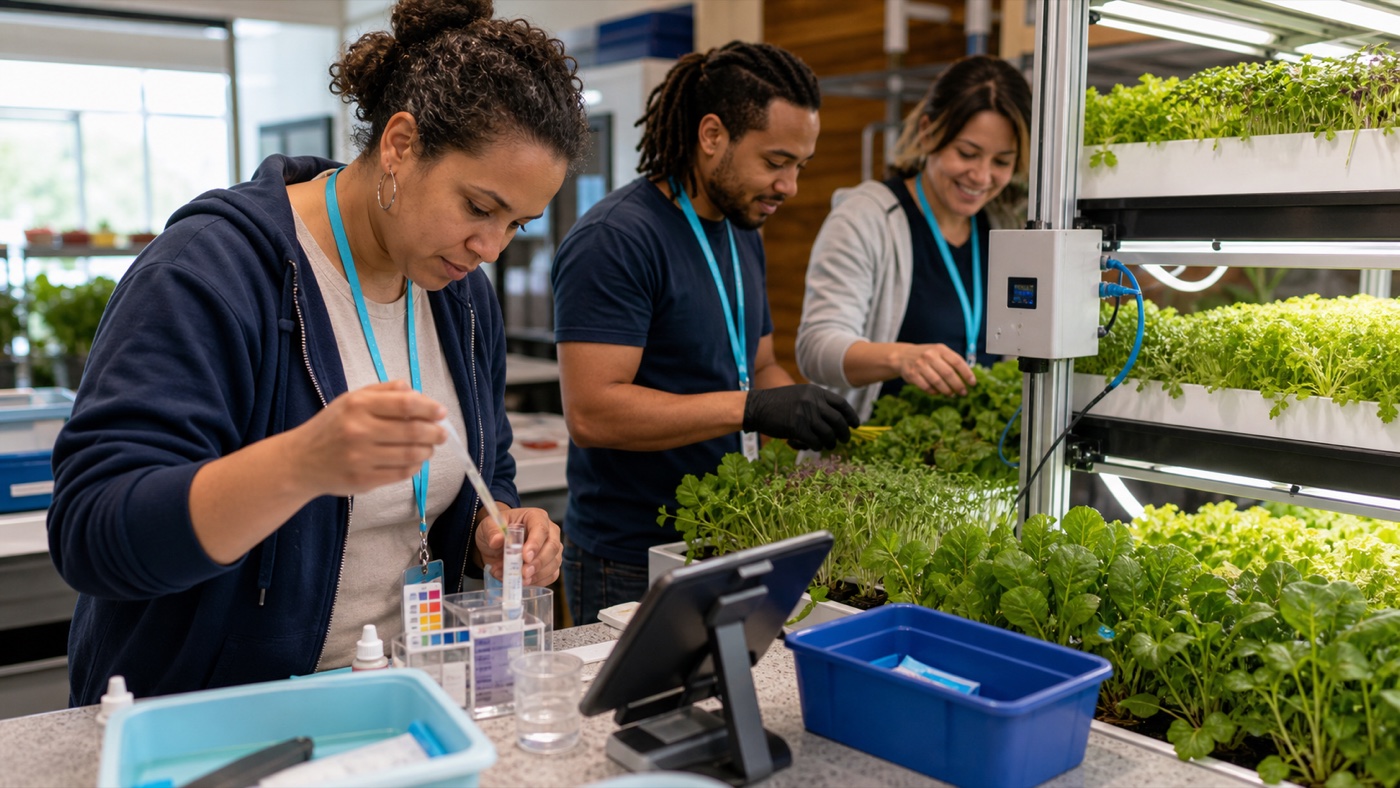
Adult learners checking water chemistry and harvesting greens at a hydroponic grow rack

Green systems that teach

Hydroponics becomes food security, sensor education, delivery practice, and documented community benefit.

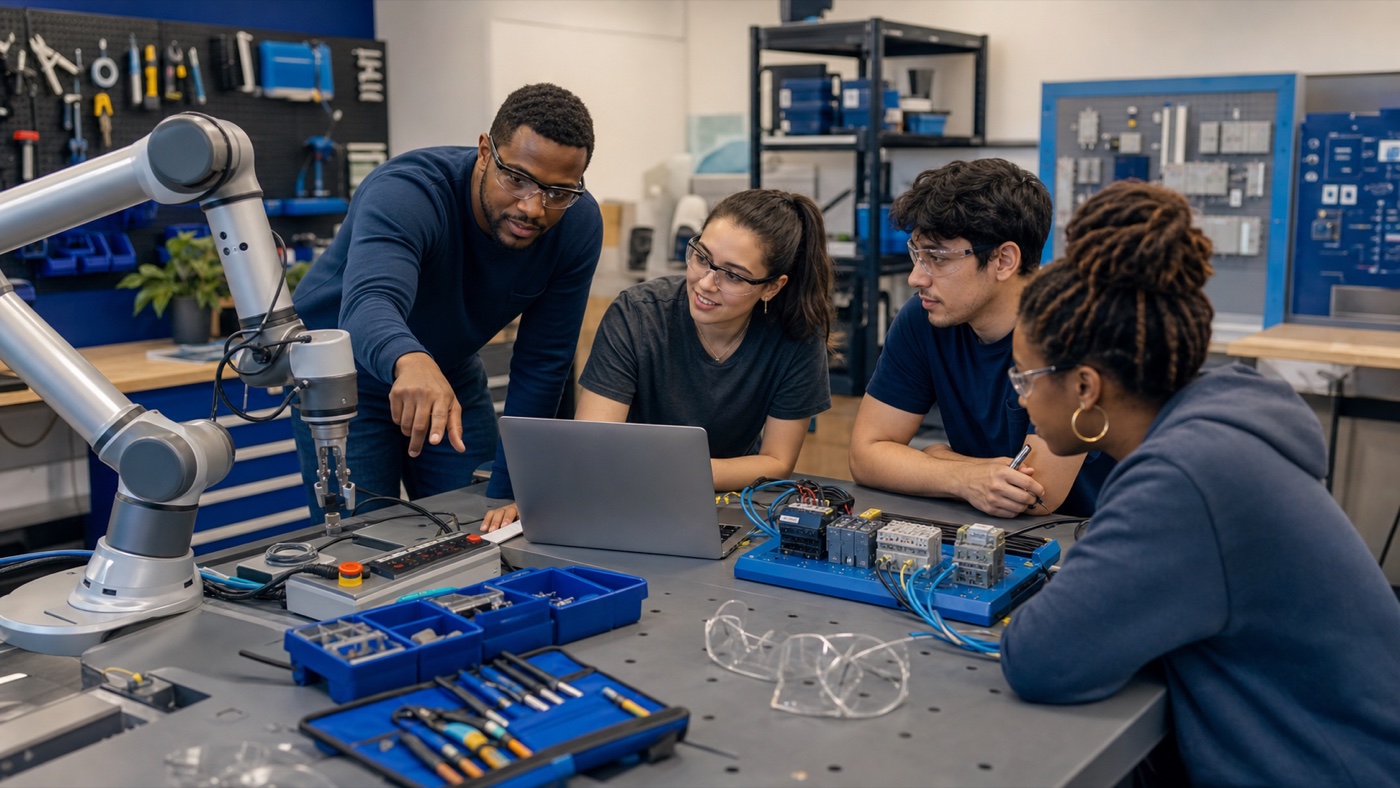
Adult learners gathered around a robot arm, laptop, PLC trainer, and tools in a workforce lab

Robotics people can touch

Robot arms, PLCs, tools, and safety practices become a pathway into automation and field-service work.

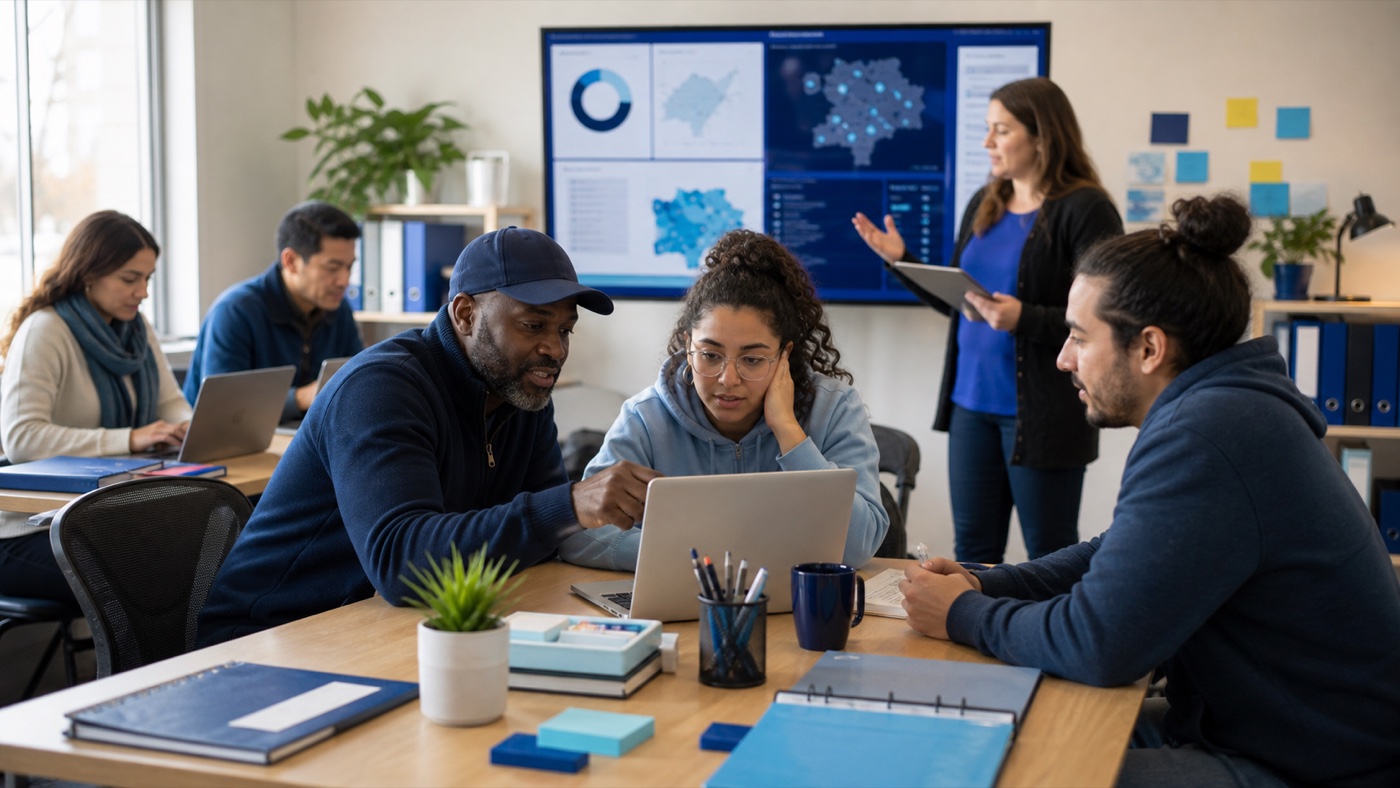
Community data stewards working together at laptops with abstract dashboards in the background

Data work with a human purpose

Verified records, resource navigation, referrals, and dashboards give the community a memory it can trust.

The six stations

Community problems become teachable enterprises.

Station 1 · The Grow

Fairfield Fresh

Produce, microgreens, hydroponics, and food-security data.

Hydroponic grow racks create fresh food and a green-tech classroom. Students learn plant science, water chemistry, food safety, sensors, and delivery operations while the station produces donation data and future restaurant revenue.

  • Solves: fresh food access and green job exposure
  • Teaches: CEA, sensors, ServSafe, crop operations
  • Employs: grow techs, delivery helpers, youth/community instructors
Station 2 · The Core

The County Brain

AI/data stewardship and service-directory maintenance.

The Core keeps local resources verified, cited, and usable. It powers the robot, client navigation, referral processes, dashboards, and the evidence every grant application needs.

  • Solves: outdated directories and disconnected referrals
  • Teaches: AI literacy, prompt craft, privacy, QA, data verification
  • Employs: data stewards, navigators, AI operators
Station 3 · The Anvil

Forge Automation Services

Robotics programming, PLCs, sensors, and field service.

Education robot arms, PLC trainers, grow automation, and the future Forgekeeper robot create a hands-on pathway into mechatronics. The robot is both mascot and capstone platform.

  • Solves: local automation-tech workforce gaps
  • Teaches: safety, PLCs, robot operation, sensor installs
  • Employs: robotics operators, maintenance techs, field-service crews
Station 4 · Maker Bay

Forge Goods

Fabrication, print production, parts, signs, and apparel.

3D printers and screen-printing tools turn local small-batch demand into training and product revenue. Students leave with client work, storefront products, and proof they can run production.

  • Solves: small-batch manufacturing and local merch needs
  • Teaches: CAD, slicing, print ops, screen printing, fulfillment
  • Employs: makers, press operators, product assistants
Station 5 · Storefront

The Enterprise Engine

Micro-enterprise, documentation services, and first-dollar proof.

The Storefront removes the gap between learning a skill and earning with it. It supports product listings, documentation services, student-owned designs, fulfillment, bookkeeping, and paid work experience.

  • Solves: the first-sale barrier
  • Teaches: pricing, listings, photography, taxes, customer communication
  • Employs: product leads, doc-service operators, fulfillment helpers
Station 6 · Commons

The Fundability Engine

Public workshops, open hours, demo days, and community trust.

The Commons makes the work visible: grow tours, robotics demos, resume nights, family AI literacy, storefront launches, and partner events. It is the front door for students, customers, donors, employers, and agencies.

  • Solves: access, trust, and community visibility
  • Teaches: public workshops increasingly led by graduates
  • Employs: instructors, event helpers, front-desk and outreach roles
Launch sequence

Start earning while the Forge is still becoming.

The first wave should be cheap, visible, and revenue-aware: Core, Storefront policy spine, Grow racks, and Commons open hours. Then hardware stations come online as partnerships and equipment funding mature.

Wave 1Core, Storefront, Grow, Commons, AI/data and micro-enterprise cohorts.
Wave 2Maker Bay and Anvil hardware, fabrication, robotics, and automation classes.
Wave 3Industrial upgrades, public kiosk, licensed food pathway, solar and expansion.
AlwaysTrack revenue, credentials, donations, products, student payouts, and jobs.
Host, fund, teach, buy, or hire

The Forge works best when the community plugs in.

Bring equipment, a student referral stream, a production order, a funding lane, a building, a classroom, an employer need, or a community problem we can solve together.